
A portrait is more than an image; it is a condensed story that reveals personality, values, and shared history. One of the most powerful narrative devices at your disposal is the setting itself. By weaving a meaningful location perhaps the beach where you first vacationed together or the city park that hosts your Saturday picnics into the backdrop, you transform a straightforward likeness into a multidimensional memory capsule.
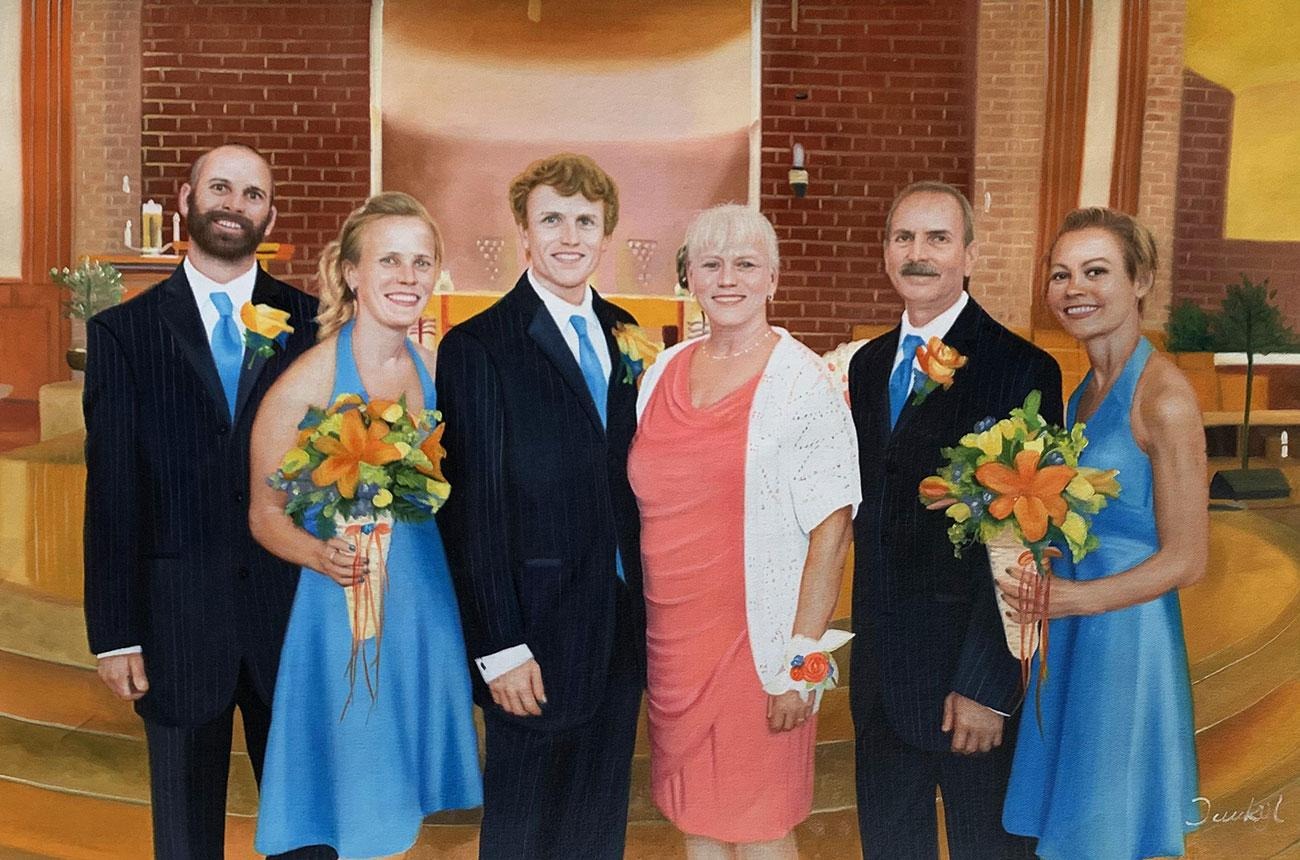
Commissioning a custom family portrait makes this kind of storytelling both practical and enduring, because an experienced artist can seamlessly harmonize people and place even when the original photographs were taken years apart and continents away.
Why Setting Matters cognition is tightly bound to context
According to research published in Memory & Cognition, environmental cues can boost episodic memory retrieval by as much as 20 percent (Smith & Vela, 2001). That means the very sight of your treasured hiking trail or seaside pier can trigger a vivid stream of associated recollections each time you glance at the portrait. In addition, studies in environmental psychology indicate that representations of natural landscapes can lower blood pressure and reduce stress hormones (Ulrich et al., 1991), so choosing a calming outdoor scene may offer genuine wellness benefits.
Matching Mood, Palette, and Geography
The craft lies in aligning emotional tone with visual elements. An urban skyline at dusk conveys sophistication and ambition, while a pastoral meadow evokes serenity and nostalgia. Artists use color temperature, atmospheric perspective, and compositional balance to achieve this alignment. The American Society of Portrait Artists notes that cooler hues in a distant horizon exaggerate spatial depth, whereas warmer foreground tones advance toward the viewer, knitting subjects and scenery together.
Example Color Temperatures and Emotional Associations
| Location Type | Dominant Palette | Typical Hex Values | Common Emotional Impact |
|---|---|---|---|
| Coastal Sunset | Warm oranges and pinks | #FF7847, #FDB0C0 | Romance, optimism |
| Alpine Meadow | Fresh greens and blues | #4CAF50, #8EC6FF | Renewal, tranquility |
| City Skyline Night | Deep indigos and golds | #1A237E, #FFC400 | Energy, sophistication |
| Desert Dusk | Muted siennas and purples | #A65E2E, #7E57C2 | Resilience, wonder |
Technical Considerations for a Composite Scene
Source resolution: Ensure each reference photograph meets a minimum of 150 PPI so that lighting and texture unify smoothly during the painting process.
Perspective consistency: Horizons should align; otherwise, the artist must employ vanishing-point corrections to avoid visual dissonance.
Lighting coherence: If one figure is lit from the left and the landscape is lit from the right, color-temperature adaptation or digital mock-ups are required before brush ever meets canvas.
These procedures are standard in professional studios and typically add only a few days to the project timeline, but they are essential if you want the final piece to look as though it was captured in a single shutter click.
From Snapshot to Heirloom
Once location and layout are approved in a digital mock-up, the artist transfers the design to archival-grade canvas using lightfast pigments. The result: a museum-quality work expected to last more than 100 years under typical indoor conditions, according to ASTM D4303 light-durability testing standards. Framing with UV-blocking acrylic further extends longevity while preventing color shift.
Conclusion
Incorporating a favorite locale into your family portrait enriches the artwork with layers of sentiment, psychology, and visual harmony. When executed by a skilled hand, the setting becomes a silent character, one that whispers shared stories and anchors the piece in time and place for generations to come.
Leave a Reply